
Laura B. Harrington, PhD, MPH
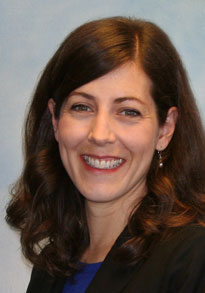
“My research aims to improve our understanding of modifiable risk factors for cardiovascular events and sequelae and outcomes relevant to brain health, especially among women.”
Laura B. Harrington, PhD, MPH
Associate Investigator, Kaiser Permanente Washington Health Research Institute
Affiliate Associate Professor, Department of Epidemiology, University of Washington School of Public Health
Associate Professor, Department of Health Systems Science, Kaiser Permanente Bernard J. Tyson School of Medicine
Laura.B.Harrington@kp.org
206-287-2066
Biography
Laura B. Harrington, PhD, MPH, is an epidemiologist with expertise in cardiovascular epidemiology, the epidemiology of aging, and women’s health. As an Associate Investigator at the Kaiser Permanente Washington Health Research Institute (KPWHRI), her work leverages pharmacologic, medical-record based, lifestyle-based, and sex-specific exposure data to better understand associations between modifiable risk factors and cardiovascular and aging-related outcomes. She has particular interest and expertise in risk factors for incident and recurrent venous thromboembolism, in cardiovascular associations with brain health, and in sex-specific risk factors (e.g. endogenous sex hormone levels, vasomotor symptoms, hormone therapy use, characteristics of the menopause transition). She leads studies set in Kaiser Permanente Washington-based populations and existing epidemiologic cohort studies including the Women’s Health Initiative (WHI), the Adult Change in Thought (ACT) study, the Cardiovascular Health Study (CHS), the Nurses’ Health Studies (NHS) I and II, the Health Professionals Follow-up Study, and the Heart and Vascular Health (HVH) case-control study. Dr. Harrington is actively leading a new National Heart, Lung, and Blood Institute-funded inception cohort study of venous thromboembolism sequelae, the After Venous Thromboembolism Research (AFTER) Study.
Prior to joining KPWHRI in 2018, Dr. Harrington completed a postdoctoral fellowship at the Harvard T.H. Chan School of Public Health, earned her PhD in Epidemiology from the University of Washington, and her MPH in Epidemiology from the University of Michigan.
In addition to her role at KPWHRI, Dr. Harrington enjoys mentoring students and guest lecturing in her roles as Affiliate Associate Professor of Epidemiology at the University of Washington School of Public Health and Assistant Professor of Health Systems Science at the Kaiser Permanente Bernard J. Tyson School of Medicine.
RESEARCH INTERESTS AND EXPERIENCE
-
Cardiovascular Health
Venous thromboembolism; lifestyle-based risk factors (e.g., physical activity, sedentary behavior); pharmacologic risk factors; women’s cardiovascular health
-
Women's Health
Endogenous sex hormones; oral contraceptive and hormone therapy use; characteristics of the menopause transition; adverse pregnancy outcomes and long-term women’s health outcomes
-
Aging & Geriatrics
Cardiovascular risk factors and events in relation to brain health
-
Medication Use & Patient Safety
Comparative safety studies; pharmacoepidemiology; prescription use in relation to cardiovascular and aging-related outcomes; oral contraceptive and hormone therapy use
Recent publications
Munsch G, Thibord F, Bezerra OC, Brody JA, van Hylckama Vlieg A, Gourhant L, Chen MH, Germain M, Caro I, Suchon P, Olaso R, Wiggins KL, Saut N, Besse C, Goumidi L, Bacq D, Harrington LB, Boland A, CHARGE Hemostasis working group, INVENT consortium, Lemarié CA, Danckwardt S, Debette S, Deleuze JF, Jacqmin-Gadda H, Rodger MA, Gagnon F, Rosendaal FR, Johnson AD, Smith NL, Couturaud F, Morange PE, Trégouët DA Genomic Landscape of Thrombosis Recurrence Risk Across Venous Thromboembolism Subtypes 2024 Dec 3 doi: 10.1101/2024.12.02.24317788. Epub 2024-12-03. PubMed
Harrington LB, Powers JD, Bayliss EA, Fortmann SP, Shortreed SM, Walker RL, Floyd JS, Kuntz J, Fuller S, Alberston-Junkans L, Lee MH, Temposky LA, Dublin S Current use of estrogen-containing oral contraceptives or hormone therapy and risk of COVID-19 infection and hospitalization: a population-based cohort study 2024 Oct 7;193(10):1417-1425. doi: 10.1093/aje/kwae066. Epub 2024-05-16. PubMed
Greenwood-Hickman MA, Shapiro LN, Chen S, Crane PK, Harrington LB, Johnson K, LaCroix AZ, Lane LG, McCurry SM, Shaw PA, Rosenberg DE Understanding resilience: Lifestyle-based behavioral predictors of mental health and well-being in community-dwelling older adults during the COVID-19 pandemic 2024 Aug 12;24(1):676. doi: 10.1186/s12877-024-05251-3. Epub 2024-08-12. PubMed
Harrington LB, Benz L, Haneuse S, Johnson E, Coleman KJ, Courcoulas AP, Li RA, Theis MK, Cooper J, Chin PL, Grinberg GG, Daigle CR, Chang JH, Um SS, Yenumula PR, Getty JZ, Arterburn DE Bariatric Surgery and the Long-Term Risk of Venous Thromboembolism: A Population-Based Cohort Study 2024 Jun;34(6):2017-2025. doi: 10.1007/s11695-024-07236-y. Epub 2024-04-30. PubMed
Harrington LB, Ehlert AN, Thacker EL, Jenny NS, Lopez O, Cushman M, Olson NC, Fitzpatrick A, Mukamal KJ, Jensen MK Levels of procoagulant factors and peak thrombin generation in relation to dementia risk in older adults: The Cardiovascular Health Study 2024 Mar;235:148-154. doi: 10.1016/j.thromres.2024.01.024. Epub 2024-02-04. PubMed

Research

Study links sitting for longer stretches to risk of blood clots in older women
Taking more breaks from sitting could potentially lower the risk.
Research

COVID risks not meaningfully greater with estrogen-containing medications
Oral contraceptives, hormone therapy not linked to more severe COVID outcomes.
Research

Study finds bariatric surgery linked to substantially lower risk of blood clots long-term
Largest study to date helps patients weigh risks and benefits of surgery.
Healthy findings blog

New grant boosts research on cardiovascular disease
Epidemiologist Laura B. Harrington, PhD, MPH, speaks about working in cardiovascular and aging research.