
Obesity
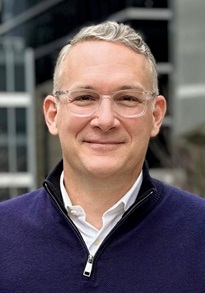
“We’re looking for innovative ways to both treat and prevent obesity — including creating healthier environments and designing programs for whole families.”
David Arterburn, MD, MPH
Kaiser Permanente Washington Health Research Institute Senior Investigator
Washington Permanente Medical Group, Internal Medicine
Research overview
“Obesity is the No. 1 health problem in the United States because it negatively affects our population’s health more than any other condition,” said Kaiser Permanente Washington Health Research Institute Senior Investigator David Arterburn, MD, MPH. Kaiser Permanente Washington researchers are doing practical research to learn how doctors, patients, families, employers, and policymakers can best work together to prevent and treat obesity.
“We’re focusing on 3 ways to halt the obesity epidemic,” said Senior Investigator Dori Rosenberg, PhD, MPH. “We’re helping to change obesity-promoting environments, bringing evidence-based prevention and treatment programs into health care systems, and helping people develop lifelong healthy diet and activity habits.”
Kaiser Permanente Washington obesity research areas include:
- Helping patients and clinicians navigate the expanding options for obesity treatment, including Wegovy and other GLP-1s (short for glucagon-like peptide-1 receptor agonists)
- Reducing sedentary behavior and promoting physical activity and healthy diet in various age groups, populations with chronic conditions, and families
- Encouraging shared decision-making to help patients find the best way to a healthy weight
- Implementing health coaches and nutrition support in primary care to encourage behavior changes
- Leveraging social networks to support lifestyle change programs
- Understanding relationships between medications and genetic factors in developing obesity
- Supporting health system, community, and national policies that address obesity
- Studying relationships between obesity and depression, diabetes, and other conditions
- Understanding the long-term benefits and risks of bariatric (weight loss) surgery
“Obesity is caused by many factors, so at Kaiser Permanente Washington, we’re working on many levels,” said Paula Lozano, MD, MPH, a senior investigator and Kaiser Permanente Washington’s senior associate medical director for research and translation. “We’re improving health care to help people who are obese now. But since obesity is a societal problem, we’re also studying how to change our homes and workplaces and neighborhoods to create more healthy environments.”
Recent publications on Obesity
Emmons KM, Doubeni CA, Fernandez ME, Miglioretti DL, Samet JM. National Institutes of Health Pathways to Prevention workshop: methods for evaluating natural experiments in obesity. Ann Intern Med. 2018 Jun 5;168(11):809-814. Epub 2018 May 1. PubMed
Takemoto M, Lewars B, Hurst S, Crist K, Nebeker C, Madanat H, Nichols J, Rosenberg DE, Kerr J Participants' Perceptions on the Use of Wearable Devices to Reduce Sitting Time: Qualitative Analysis 2018 Mar 31;6(3):e73. doi: 10.2196/mhealth.7857. Epub 2018-03-31. PubMed
Young DR, Fischer H, Arterburn D, Bessesen D, Cromwell L, Daley MF, Desai J, Ferrara A, Fitzpatrick SL, Horberg MA, Koebnick C, Nau CL, Oshiro C, Waitzfelder B, Yamamoto A Associations of overweight/obesity and socioeconomic status with hypertension prevalence across racial and ethnic groups 2018 Mar;20(3):532-540. doi: 10.1111/jch.13217. Epub 2018-02-12. PubMed
Rosenberg DE, Lee AK, Anderson M, Renz A, Matson TE, Kerr J, Arterburn D, McClure JB Reducing Sedentary Time for Obese Older Adults: Protocol for a Randomized Controlled Trial 2018 Feb 12;7(2):e23. doi: 10.2196/resprot.8883. Epub 2018-02-12. PubMed
Drewnowski A, Buszkiewicz J, Aggarwal A, Cook A, Moudon AV A new method to visualize obesity prevalence in Seattle-King County at the census block level 2018 Feb;4(1):14-19. doi: 10.1002/osp4.144. Epub 2017-12-28. PubMed
Researchers in Obesity
 David E. Arterburn, MD, MPHSenior Investigator |
 Allen Cheadle, PhDSenior Investigator, KPWHRI; Senior Research Associate, CCHE |
 Andrea J. Cook, PhDSenior Biostatistics Investigator |
 Maricela Cruz, PhDAssociate Biostatistics Investigator |
 Nicole M. Gatto, PhD, MPHPrincipal Collaborative Scientist |
 Beverly B. Green, MD, MPHSenior Investigator |
 Mikael Anne Greenwood-Hickman, MPHSenior Collaborative Scientist |
 Paula Lozano, MD, MPHSenior Investigator; Director, ACT Center |
 Dori E. Rosenberg, PhD, MPHSenior Investigator |
 Gregory E. Simon, MD, MPHSenior Investigator |

Research

As GLP-1 use expands, researchers look for answers
David Arterburn is leading research to help patients and clinicians navigate the rapidly changing GLP-1 landscape.
News

Filling evidence gaps on obesity treatment
Several new grants will fund research on effectiveness, safety, and equitable use of anti-obesity medications.
Research

Neighborhood density connected to changes in body mass index for children
Study uses geographic data to track change over time.
News

Seattle's Sweetened Beverage Tax linked to improved public health outcomes
An evaluation with KPWHRI researchers looked at the impacts of the tax so far.
Live healthy

Comparing different types of bariatric surgery: What’s right for you?
Based on their studies, KPWHRI researchers explain the risks and benefits.
New findings
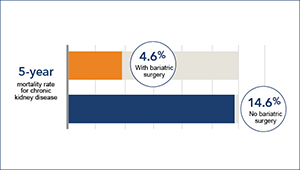
Is bariatric surgery helpful in chronic kidney disease?
David Arterburn and colleagues find that bariatric surgery is linked to lower death risk in persons with obesity and CKD.
Healthy Findings Blog

We decreased people’s daily sedentary time by an hour
Changing behavior isn’t easy, but Dr. Dori Rosenberg helped older people to stand and walk more.